
Helping Children Find Their Voice
There’s something about summer that naturally invites growth. Schedules loosen, routines shift, and many families begin thinking about independence in new ways. For parents of children with IEPs or 504 plans, this season can also create space for an important question:
How do we help our child speak up for themselves?
Self-advocacy is one of the most valuable long-term skills a child can develop—not just for school, but for life. And contrary to what many people believe, self-advocacy doesn’t begin in high school or adulthood. It starts much earlier, often in small, everyday moments.
At Falcon Sky, we believe self-advocacy is built gradually through confidence, support, and opportunities to participate in decisions that affect a child’s life.
What Self-Advocacy Actually Means
Self-advocacy is not about teaching children to argue, challenge authority, or navigate every situation independently before they’re ready.
It’s about helping them:
Understand their own needs
Express preferences and concerns
Ask for help when needed
Participate in decisions about supports and accommodations
For some students, self-advocacy may look like independently requesting a sensory break. For others, it may simply mean learning to say:
“I don’t understand yet.”
Both matter.
Why Self-Advocacy Is So Important
As children grow, the expectation for independence increases—often quickly.
Students are expected to:
Manage assignments
Communicate with teachers
Understand accommodations
Navigate social situations
Participate in transition planning
Without self-advocacy skills, even strong academic students may struggle to access the supports available to them.
Building these skills early helps children:
Develop confidence
Reduce frustration
Increase independence
Strengthen communication with adults and peers
Most importantly, it helps children begin to see themselves as active participants in their own success.
Tools You Need to Advocate Effectively
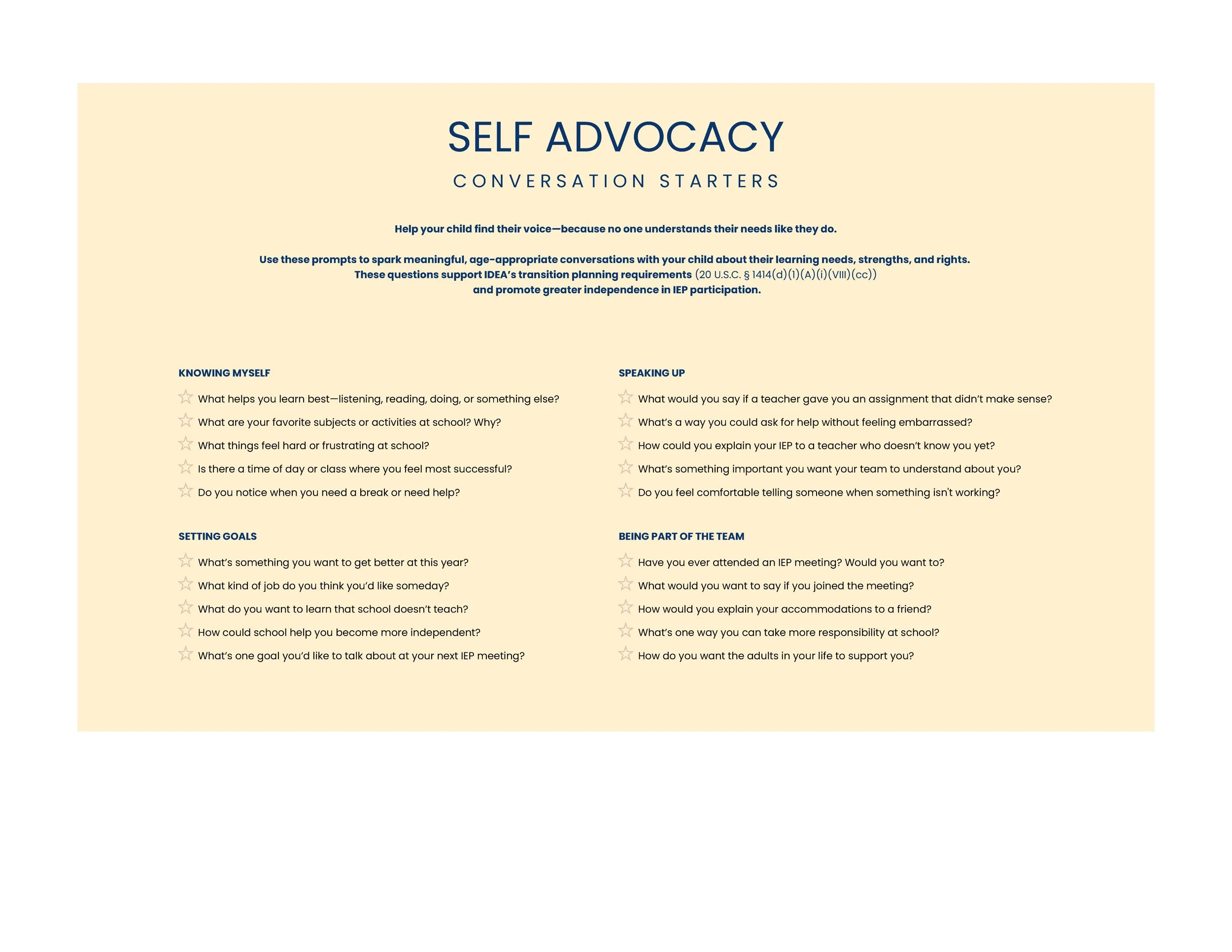
To help families begin these conversations naturally, we created a set of Self-Advocacy Conversation Starters designed for children and teens.
These prompts support:
Communication
Reflection
Confidence-building
Family discussion
They’re simple, approachable, and easy to incorporate into everyday routines.
Falcon Sky helps you master these tools so you can advocate effectively, even in difficult situations.
Self-Advocacy Starts Small
Many parents assume self-advocacy begins with formal IEP participation. In reality, it often starts much earlier and more naturally.
Examples include:
Choosing between two activities
Telling an adult when something feels overwhelming
Asking for clarification
Explaining what helps them focus
Identifying emotions or sensory needs
These small moments build the foundation for larger conversations later.
The Role Parents Play
Parents are often the first people to model advocacy for their children. Children learn by watching:
How adults ask questions
How concerns are communicated respectfully
How problem-solving happens collaboratively
Over time, parents can begin shifting from:
speaking for their child
to:
speaking with their child.
This transition doesn’t happen overnight—and it doesn’t need to.
Encouraging Participation in the IEP Process
As children mature, involving them in parts of the IEP process can be incredibly empowering.
Participation might include:
Sharing strengths or interests
Talking about favorite subjects
Discussing what helps at school
Attending part of a meeting
Helping choose goals
Students don’t need to lead an entire meeting to benefit from involvement. Even brief participation can help build ownership and confidence.
Self-Advocacy Looks Different for Every Child
Self-advocacy is not one-size-fits-all.
For some students, communication may happen verbally. For others, it may involve:
AAC devices
Visual supports
Scripts or sentence starters
Written communication
Supported choices
The goal is not perfection or independence at all costs. The goal is meaningful participation in ways that are accessible and authentic to the child.
Supporting Self-Advocacy Without Pressure
Parents sometimes worry:
What if my child feels anxious speaking up?
What if they say the “wrong” thing?
What if they aren’t ready?
These concerns are valid. Self-advocacy should feel supportive—not performative.
Children build confidence through:
Practice
Preparation
Encouragement
Safe opportunities to try
Growth often happens gradually.
Using Conversation Starters to Build Confidence
One of the easiest ways to support self-advocacy is through regular conversation.
Simple prompts help children:
Reflect on their experiences
Identify preferences and challenges
Practice expressing themselves
Questions like:
“What helps you learn best?”
“What feels hardest right now?”
“What would you like adults to understand?”
…can open meaningful conversations without pressure.
Preparing for the Future
Self-advocacy becomes especially important during transition planning and adolescence.
Students who understand:
Their accommodations
Their strengths
Their learning needs
How to ask for support
…are often better prepared for:
Middle school
High school
College or vocational settings
Employment
Community independence
These skills are built over time—not all at once.
Conclusion
A special education advocate plays a critical role in ensuring that children with special needs receive the education they deserve. At Falcon Sky Advocacy Group, we’re here to make that process easier for families and schools alike. Whether you need help preparing for a meeting, understanding your legal rights, or advocating for the right services, we’re committed to walking alongside you every step of the way.
Let us be your guide through the process. Reach out to Falcon Sky today and start building a path forward for your child’s success.
