Milestones and Mindsets

Planning for What Comes After the IEP
May often brings a shift in perspective. As the school year winds down, parents start thinking less about day-to-day routines and more about what’s ahead.
For families of students approaching adolescence, this season often marks the beginning of a new phase of advocacy: transition planning.
At Falcon Sky, we see transition planning not as a single meeting or form—but as a mindset shift. One that centers your child’s voice, future goals, and growing independence.
What Transition Planning Really Means
Transition planning is required under IDEA no later than age 16 (and earlier in many states), but best practice is to begin thinking ahead well before that.
At its core, transition planning asks:
Who is this student becoming?
What skills do they need beyond academics?
How do we support independence, choice, and self-advocacy?
This isn’t about having all the answers—it’s about asking the right questions early.
Keeping the Student at the Center
Strong transition planning starts with the student.
Parents often ask whether their child should be involved in IEP meetings or planning conversations. When appropriate, inviting students into the process helps:
Build self-awareness and confidence
Clarify interests and preferences
Practice self-advocacy in supportive ways
Even small steps—like gathering student input or discussing future goals informally—can shape a more meaningful plan.
Tools You Need to Advocate Effectively
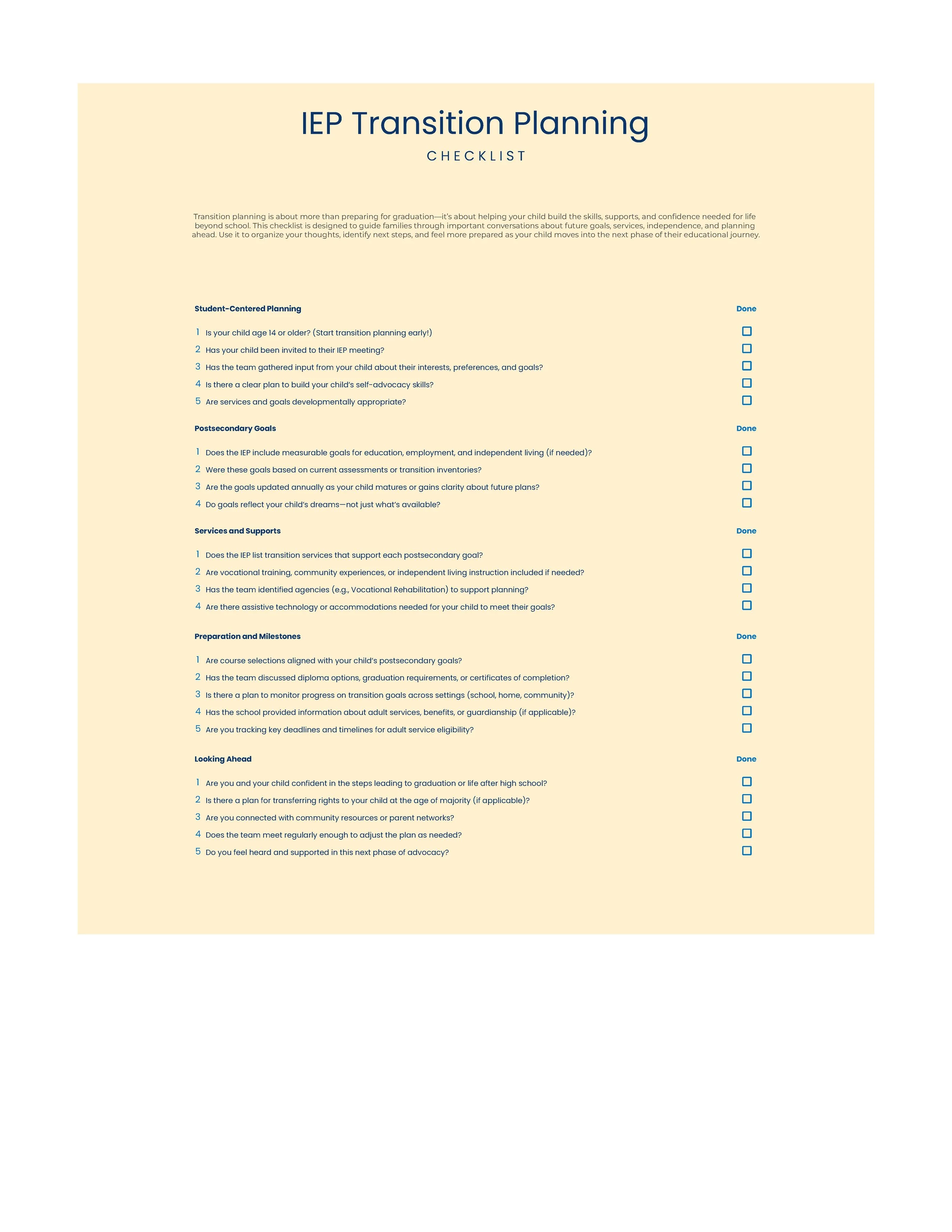
To help families organize their thinking and prepare for this next phase, we’ve created an IEP Transition Planning Checklist.
It walks through key questions related to student-centered planning, goals, services, milestones, and looking ahead—so nothing important gets overlooked.
Falcon Sky helps you master these tools so you can advocate effectively, even in difficult situations.
Looking Beyond the Classroom
As students get older, IEP goals expand beyond academic benchmarks.
Effective transition planning considers:
Postsecondary education or training
Employment and vocational interests
Independent living skills, when appropriate
Goals should be measurable, based on current assessments, and revisited regularly as students grow and interests evolve. They should reflect the student’s aspirations—not just available programs or default pathways.
Aligning Services and Supports with Future Goals
Once goals are identified, services and supports should align clearly.
This may include:
Transition services tied directly to postsecondary goals
Community-based experiences or vocational training
Assistive technology or accommodations that support independence
Transition planning works best when services aren’t added “just in case,” but thoughtfully connected to where the student is headed.
Tracking Milestones Along the Way
Preparation doesn’t happen all at once. It’s built through milestones.
Families often benefit from checking in on:
Course selections and diploma options
Graduation requirements or certificates
Progress monitoring across school, home, and community settings
Timelines for adult services or benefits
Keeping track of these pieces helps reduce last-minute stress and ensures smoother transitions.
Planning Ahead with Confidence
Transition planning also brings big-picture questions:
How will rights transfer at the age of majority?
What adult services or agencies should we connect with?
How often does the team revisit and adjust the plan?
Parents don’t need to navigate these questions alone—but they do deserve clear information and time to consider options.
Transition Is a Process, Not a Deadline
One of the most important mindset shifts is this:
Transition planning isn’t about racing toward graduation. It’s about preparing for life beyond it—at a pace that respects the student and the family.
Feeling heard, supported, and informed matters just as much as the paperwork.
Conclusion
A special education advocate plays a critical role in ensuring that children with special needs receive the education they deserve. At Falcon Sky Advocacy Group, we’re here to make that process easier for families and schools alike. Whether you need help preparing for a meeting, understanding your legal rights, or advocating for the right services, we’re committed to walking alongside you every step of the way.
Let us be your guide through the process. Reach out to Falcon Sky today and start building a path forward for your child’s success.
If you’re unsure when to start, what to ask, or how to advocate for a plan that truly reflects your child, Falcon Sky is here to help.
We support families through transition planning with clarity, collaboration, and care.
Explore our services or schedule a Discovery Call to talk through next steps.
